If Someone Has a Benign Tumor as a Baby, Does That Make Them Prone to Tumors
The word "Tumor" means an overgrowth of an abnormal tissue mass. This over-growth is unrelated or not in coordination with the growth and development of rest of the body. In medicine, the term "Neoplasia" is used to address a tumor – "Neo" meaning New and "Plasia" meaning Formation.
Just similar parasites, which depict diet from its host, tumors likewise grow at some function of the body and cause wasting of tissues of the afflicted person. Also, tumors tend to increase in size irrespective of their location or neighbouring structures.
Tumors are differentiated into two types depending upon their growth, spread, clinical and microscopic features
| Features | Beneficial Tumors | Malignant Tumors |
|---|---|---|
| Boundaries | Encapsulated or well confining | Irregular and poorly confining |
| Surround tissues | Tumor expands and pushes or compresses the surrounding tissues without invading them | Invades and destructs the surrounding tissues |
| Size | Usually small | Unremarkably larger |
| Shape | More often than not spherical or oval | Irregular shape |
| Pattern | Closely resembles original tissue and is well-differentiated | Poorly resembles original tissue and is poorly-differentiated |
| Growth rate | Usually slow | Unremarkably rapid |
| Metastasis (spread to other sites) | Absent-minded | Frequently present |
| Prognosis | Local complications due to tumor | Death due to local and metastatic complications |
It is quite articulate from the table to a higher place that benign tumors are relatively harmless and be removed surgically. They do not invade or destroy the next tissues.
Malignant tumors, on the other mitt, tend to destroy and spread to other tissues. They tend to form secondary tumors at other sites. This procedure of infiltration to other sites is chosen "Metastasis".
Routes past Which Malignant Tumor Metastasize are
1. Lymphatic organisation
2. Blood apportionment
three. Spread along body cavities like peritoneum, cerebrospinal fluid
Grading and Staging of Cancer
Grading of cancer is based on ii features are a degree of differentiation and rate of growth. Grading is the microscopic and macroscopic/gross degree of differentiation of a cancerous tumor. Based on this, Border's grading for cancer is
➢ Course-I – Well differentiated (less than 25% anaplastic cells), least malignant.
➢ Grade-II – Moderately differentiated (25-50% anaplastic cells)
➢ Grade-III – Moderately differentiated (50-75% anaplastic cells)
➢ Course-IV – Poorly differentiated (more than 75% anaplastic cells). Most malignant.
Staging measures Extent of Spread of A Malignant Tumor. Two Methods for Staging are Used
➢ TNM staging – T-primary tumor, N-regional nodal involvement and K-afar metastasis.
➢ AJC staging – the American Articulation Committee staging divides cancer from stage 0-IV taking into account primary tumor, nodal involvement and metastasis.
Survival of Patients having Malignant Tumors Depends upon Factors
- Size of cancerous tumor
- Class of tumor
- Vascular invasion
- Lymph node involvement
- Cancer Markers – These tumor cell markers are different for different types of cancers.
Causes For Malignant Tumors
Cancer has emerged to be a major health business organization owing partially to not-modifiable factors similar genetics and modifiable factors like eating habits, cigarette smoking, substance abuse, sedentary lifestyle, concrete inactivity and an un-ending corporeality of stress.
| Non Modifiable Factors | Modifiable Factors |
| Family History – almost 5% of all cancers have a potent correlation with family history. Ex: ● Retinoblastoma-about 40% patients accept a family history of the aforementioned. ● Multiple endocrine neoplasia ● Breast cancer-daughters or close female person relatives of a breast cancer patient accept a 3-fold chance of developing breast cancer. ● Neurofibromatosis I and II Racial and Geographic factors: ● Cancer of lung, breast and colon are mutual among Europeans and Americans ● Cancer of skin, liver, penis and cervix are mutual among Africans ● Cancer of tum is commonly seen among Japanese people ● Cancer of breast, liver, cervix, oral cavity is common among Indians. Sex – some tumors accept analogousness to certain genders Ex: Lung cancer is seen more unremarkably in men than in women. Infection – oncogenic viruses can invade the body via viral infection with: ● Man T-prison cell Leukemia Lymphoma Virus type-I (HTLLV) ● Human Papilloma Virus (HPV) ● Epstein-Barr Virus (EBV) ● Hepatitis-B Virus (HBV) Exposure to ionizing radiation as a role of treatment for another type of cancer. | Cigarette smoking – Associated with cancer of oral crenel, pharynx, larynx and lungs Booze Abuse – Linked to cancer of stomach, esophagus, liver and urinary tract. Cancer of neck is related to multiple partners, age at start coition and unprotected coition. Chewing Tobacco – Related to cancer of cheek and natural language Occupational exposure – To carcinogenic agents like: ● Benzene ● Asbestos ● Atomic number 82 ● Vinyl chloride ● Exposure to radiation, etc. Dietary habits – Low quality diet like junk and fried food and less intake of fruits and vegetables are linked to less intake of anti-oxidants Obesity – Overweight individuals have a high risk of developing colon cancer due to high fats and less fiber content in diet. |
Signs and Symptoms of Cancerous Tumors
Clinical features of malignant tumors will be seen both, considering of local furnishings of that tumor and certain systemic effects since it invades other structures as well.
| Local furnishings | Systemic effects |
| Obstruction or pressure on flow of claret or other fluids like bile or cerebrospinal fluid. Bleeding or ulceration is commonly seen in gastric, colonic and renal jail cell carcinomas Infection of organs due to obstruction such as pneumonia and urinary tract infection Rupture of a malignant tumor – cancers of ovary, bladder and colon tend to rupture | Fatigue – because of loss of muscle office and occasionally sleep disturbances. Anemia from bleeding, cytotoxic drugs, radiation and involvement of bone marrow. Cachexia – constitutional symptoms like weight loss, fever, loss of appetite and progressive weakness Paraneoplastic syndrome – certain malignant tumors start to release hormones Ex: ● Hypoglycemia due to insulin like substance secreted past a fibrosarcoma ● Secretion of parathyroid like hormone from a colorectal adenocarcinoma |
Diagnosis of Cancerous Tumors
Timely diagnosis and detection of a cancerous tumor is extremely important to mange and eliminate the tumor and its arrest its progress at an early phase. Nearly commonly used diagnostic techniques for malignant tumors are
- Histolog y – Histology orMicroscopic examination of a tumor mass with the assist of a biopsy. This is the most valuable and the nigh reliable method to diagnose if the tumor is beneficial or malignant and even for staging the cancer.
- Cytology – fine needle aspiration cytology (FNAC) collects samples of a lesion to be examined under a microscope. The procedure is less painful as compared to a biopsy.
- Histo-chemical science and Cytochemistry – This method is an boosted tool to help in agreement the chemic limerick of cells by using various staining methods.
- Electron Microscopy – This ultra-structural microscopy helps to understand the construction of tumor cells and their components for diagnostic purpose.
- Tumor Markers – Tumor markers are biochemical assays of products secreted past a malignant tumor. Tumor markers back up a diagnosis and they too help in prognosis.
Example of sure tumor markers:
● Alpha-feto protein – hepatocellular carcinoma
● Prostate Specific Antigen (PSA) – Prostate Cancer
● CA-125 – Ovarian Cancer
● CA-15-iii – Breast Cancer - Flow Cytometry – This is a computerized technique to understand characteristics of tumor cells in item and to shop data for subsequent comparison.
Treatment of Malignant Tumors
Treatment and management of malignant tumors depends entirely on their growth and spread. Some treatment options bachelor are:
- Surgery – Surgery woks for tumors that are confined to a single location. Surgery cannot exist used as a handling plan for tumors which have spread to other organs.
Surgery can remove a localized tumor and even ease symptoms caused by pressure of that tumor. - Radiation therapy – High doses of radiations are used to impale cancer cells and compress tumors. Radiation also affects healthy cells which is a major side outcome.
Internal radiation therapy is often used to treat cancers of thyroid, head and neck, prostate, cervix, breast and eye.
Radiation therapy is usually given forth with surgery and chemotherapy. - Chemotherapy – This therapy is used to destroy cancer cells and easy symptoms of cancer. Chemotherapy tin be given orally, subcutaneously or intravenously. It tin also be injected into the muscles of arms or thighs.
- Immunotherapy – This therapy uses substances made out of living organisms to treat malignant tumors.
Immunotherapy enhances the trunk's immune system to fight confronting cancer. Information technology is less ordinarily used every bit compared to surgery, chemotherapy and radiation therapy. Immunotherapy has side effects like flu-like symptoms, nausea and vomiting, fatigue, pain, and swelling, soreness, rash and itching. - Target therapy – This therapy has a pre-requisite of biopsy of the malignant tumor. This therapy destroys cancer cells and stops cancer cells from growing. Information technology also boosts amnesty and prevents germination of new claret vessels (angiogenesis) inside the tumors. Without claret vessels, the tumor does not grow in size or shrinks.
- Hormone therapy – This therapy slows down the growth of cancer which uses hormones to abound. Hormone therapy is normally used to treat prostate cancer and breast cancer. Side effects include hot flashes, weakness of bones, nausea, and fatigue and mood changes.
- Stem prison cell transplant – In this therapy healthy blood-forming stem cells are administered intravenously. These stem cells travel to the bone marrow and accept identify of the cells that were destroyed previously by radiations or chemotherapy. This therapy is commonly used for leukemia, lymphoma and sometimes for multiple myeloma and neuroblastoma.
Natural Remedies for Malignant Tumors
Usually malignant tumors are diagnosed at much later stage when signs and symptoms become alarming. Therefore, information technology is impossible to treat cancer without the help of the in a higher place mentioned treatment strategies.
However, certain natural remedies can be taken to not just effort to treat malignant tumors naturally, only also to prevent the risk of having cancer.
- A lot of studies have been done to study the role of a ketogenic nutrition along with hyperbaric oxygen chamber therapy.
- Ketogenic diet enhances the body'due south ability to catechumen fats into sources of energy.
- Cancer cells live due to energy created by fermentation of glucose. Ketogenic nutrition reduces the free energy generated past breakup of glucose.
- Following ketogenic diet regularly has known to increase survival charge per unit of cancer patients by about 50%.
- Vegetables and fruits depression in carbohydrates are rich in anti-oxidants and they eliminate gratis radicals from apportionment
- Combining ketogenic diet and hyperbaric oxygen therapy has results in reducing growth of tumors and reduce glucose levels which serve as a source of energy for tumor cells.
- Fresh Fruits and Vegetables – Sulforaphane establish in cruciferous vegetables reduces carcinogens from cells and tissues. Quercetin found in vegetables, broccoli, ruby-red onion, pepper, grapes, green tea, blackness tea and scarlet wine is known to foreclose cancer metastasis.

- Fermented Vegetables – Harmful leaner in the gut are responsible for several illnesses, metabolic conditions and cancers of colon, rectum, pancreas and gall-bladder. Fermented vegetables and food help in maintaining healthy gut catamenia which in return maintains overall wellness.
- Vitamin D – This vitamin is widely used for management of lymphomas and cancers of bladder, ovaries, caput and cervix. Vitamin D promotes functioning of GcMAF (Glycoprotein Macrophage Activating Gene) which is known to regulate cancer cells and opposite chest cancer.
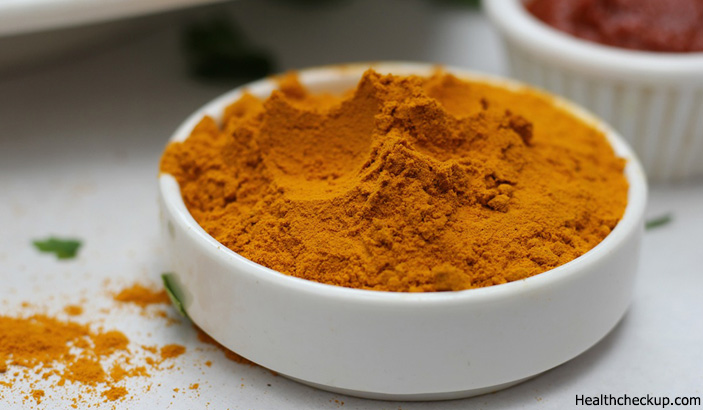
- Turmeric – This kitchen herb has anti-inflammatory backdrop and a strong power to fight against infections and cancer cells.
- Budwig's Protocol – Dr. Johanna Budwig discovered this mixture. A combination of soft, fresh cheese (quark) and 1 tablespoon of flaxseed oil or ground flax seeds was the Budwig protocol.
Flaxseed oil in quark is rich in electrons and saturated fats. Quark protects the electrons within the flaxseed oil then that it can charge expressionless cells. This mixture provides energy to such cells and makes the healthy. These healthy cells then fight confronting cancer cells. - Detoxification with the help of plenty of water, infrared saunas (for deep tissue stimulation), castor oil packs, dry out brushing (for flow of lymphatics) assist in flushing out toxins from the trunk.
- Sunlight – getting acceptable amount of sun exposure is of import to stimulate glands of our trunk like the pancreas, liver, gall float and salivary glands. Sunlight non only stimulates glands to maintain health, but also removes toxins from the trunk.

- Beta-glucans – This is a soluble fiber, having a good role in lowering cholesterol. In cancer patients, beta-glucans activate allowed cells like Natural killer cells, T-cells and macrophages to act against tumor cells. Beta-glucans also aid in treating machine-immune diseases. Foods rich in beta-glucans are oatmeal, barley and mushrooms.
- Herbal Remedies – Chinese herbal remedies including acupuncture, cupping, and massage therapy and then on are useful in order to avoid side furnishings of mod treatment methods.
None of these higher up remedies are meant to substitute conventional treatment of cancerous tumors. Also, sure herbs may react adversely with your regular medications and then it is important to consult your medico or oncologist before taking whatever herbal medicines.
Medically Reviewed By

Dr. Himanshi is a Homoeopathic consultant and currently working as a lecturer in Post-graduate faculty of Homeopathy, Parul University, Vadodara. Completed BHMS and MD in Homeopathy in January 2018 and also has a clinical experience of well-nigh 6 years. Personal interests include reading, spending time with family and traveling.
Source: https://www.healthcheckup.com/cancer/malignant-tumor-symptoms-causes-diagnosis-treatment/
0 Response to "If Someone Has a Benign Tumor as a Baby, Does That Make Them Prone to Tumors"
Post a Comment